Gentle Night Weaning for Toddlers: Reducing Night Feeds Without Tears or Losing the Bond

Gentle Night Weaning for Toddlers: Reducing Night Feeds Without Tears or Losing the Bond

by Edina · Holistic Baby & Toddler Sleep Consultant · Madrid & Worldwide

You love breastfeeding. You love your toddler. And you are absolutely, completely, bone-achingly exhausted.

If you are lying awake at 2am — or 3am, or 4am — nursing for the fifth time since midnight, wondering whether you will ever sleep for more than an hour again without feeling like you have to choose between your rest and your child’s sense of safety, this is written for you.

Before anything else, here is what I need you to hear: you are not failing. There is nothing broken about your toddler. And you do not have to choose.

“Sleep is never just about sleep. And night weaning — when it is done gently, gradually, and with your child’s emotional world held at the centre — is never about taking something away. It is about slowly, tenderly, expanding the ways your little one can feel safe and loved in the night.”

Why Toddlers Still Wake Frequently to Feed — What's Really Happening Beneath the Surface

Before we talk about change, let’s talk about what is actually happening. Because understanding this is where everything truly begins.

Frequent night waking in breastfed toddlers is — and I want to say this plainly and with complete warmth — biologically normal. It is not a sign that you have made a mistake. It is your toddler’s nervous system communicating exactly what it needs.

In the second year of life, your little one is navigating an extraordinary amount: language acquisition, emotional complexity, a growing awareness of self and separation, and a nervous system that is still very much maturing. Night feeds in this season can serve:

  • Emotional regulation and the deep need for co-regulation with you
  • Comfort and reassurance during developmental leaps
  • Connection after long, stimulating days of learning and growing
  • Sleep cycle transitions — that primal, wordless pull back to safety
  • The continuation of a breastfeeding relationship that still holds deep meaning

Research in toddler sleep neuroscience consistently shows that feeding to settle is not, in itself, the cause of frequent waking. Toddlers wake for a constellation of reasons — temperament, developmental stage, sensory processing, attachment patterns — and none of these make you responsible for something going wrong.

“None of this means things cannot gently shift. It means we shift them with understanding — never against your child, and never at the cost of the trust you have built together.”

When Night Weaning Feels Urgent — And That Is Completely Valid

Most conversations about gentle night weaning assume a mother who has the time and emotional space to move slowly. And sometimes that is true. But sometimes it is not. And I want to speak to that with equal tenderness.

Sometimes a mother needs to reduce or stop night feeding because:

  • She is experiencing physical pain — mastitis, nipple trauma, a condition that makes nursing through the night genuinely unbearable
  • She has been prescribed medication incompatible with breastfeeding
  • She is preparing for surgery or a medical procedure
  • Her mental health — her nervous system, her sense of self, her capacity to be present — is telling her clearly that something needs to change, and it needs to change now
  • She has reached her limit. And her limit is enough. It does not require justification.

If any of this is you — please hear this: your needs matter. Your body matters. Your mental health matters. You do not need a reason that anyone else would call sufficient.

Needing to reduce or stop night feeding is not a failure of love. It is an act of self-preservation. And self-preservation is not selfish — it is the quiet, necessary foundation beneath everything you give your toddler every day.

When night weaning needs to happen more quickly, we approach it differently — with more immediate, close support for your little one’s nervous system, more tools for you, and a process that moves at the pace your situation requires, whilst still holding gentleness at its heart.

The Part Nobody Talks About: Your Nervous System Comes First

Whether night weaning is a gentle exploration or an urgent need, the place we always begin is with you.

Because your baby’s nights do not exist separately from your emotional world. They live inside it.

If you would like to read more about my approach click here

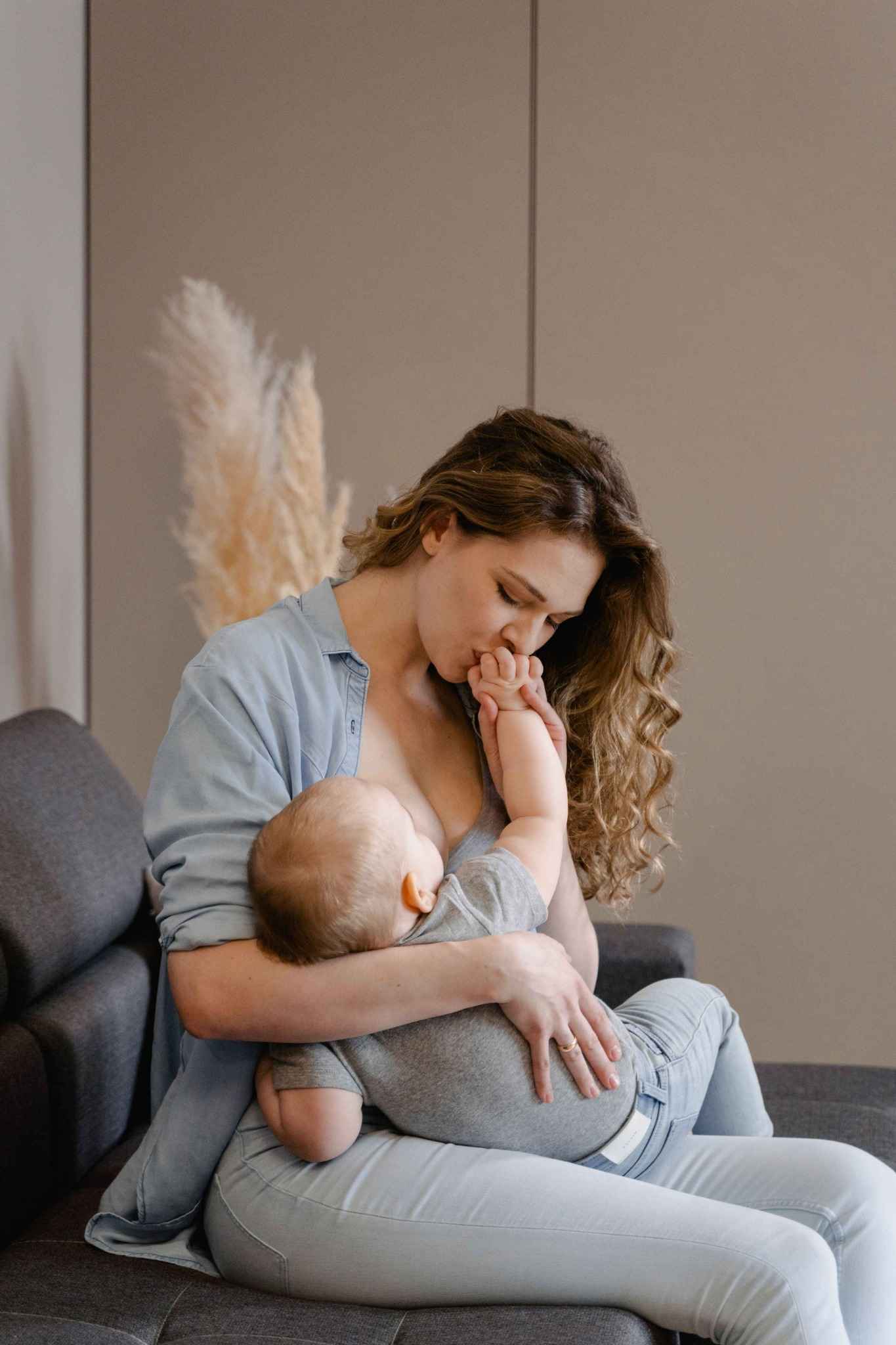
Mother gently night-weaning her toddler using a holistic baby sleep attachment-based approach

“I support babies — and I hold parents. Because when a mother feels regulated, informed, and truly seen, her little one’s sleep begins to soften too. That is not a metaphor. That is neuroscience.”

Before changing a single thing about night feeds, I invite you to tend to yourself:

Breathwork for the difficult moments

When your toddler wakes for the fourth time and you feel the wave of overwhelm rising — one hand on your chest, one on your belly. Slow breath in. Slow breath out. I am safe. We are safe. This moment will pass. This is nervous system regulation. Your calm, regulated presence is the most powerful settling tool your toddler has — more than any technique, any schedule, any method.


EFT tapping for the thoughts that spiral

Maybe I’ve created this. Maybe I should have done things differently. Maybe I’m not coping well enough. Gentle tapping can soften these thoughts and release some of the emotional weight that makes the nights feel heavier than they already are.


Permission — real, complete permission — to want rest

You are allowed to need sleep. You are allowed to want your body back at night. You are allowed to be more than a source of comfort in the dark. Giving yourself that permission — without guilt, without condition — is where change quietly begins.

A Story from Madrid: One Family's Gentle Shift

I worked with a mother and her 14-month-old who had relocated from the London to Madrid. They were building something beautiful in a new country — but parenting far from home carries its own particular weight. No grandmother nearby. No sister who could pop round. No village to lean on when the nights became very long.

By the time they came to me, their little one was waking every hour to nurse. Mum was exhausted in that deep, chronic way — the kind that quietly erodes your patience, your joy, your sense of self. She loved breastfeeding. She also knew, in her bones, that she could not continue without something shifting. She felt caught between two truths that both felt completely real.

We began not with her toddler’s sleep, but with her. Her nervous system. The guilt she was quietly carrying. The permission she had never quite given herself to want rest. Then, slowly, we expanded her little one’s comfort repertoire. We built a gentle, consistent night rhythm. We introduced touch, closeness, voice — new pathways to safety that sat alongside nursing, then gradually began to carry more of the weight.

Her little one did not feel abandoned or unheard. She felt — still — completely held. And mum began to sleep. To feel like herself again. To move through her days in Madrid with a lightness she had almost forgotten.

That is what gentle night weaning can look like. Not a programme. A relationship.

What Gentle Night Weaning for Toddlers Actually Looks Like

Gentle night weaning is not about removing comfort. It is about expanding how comfort can arrive.

When breastfeeding is the only pathway to safety in the night, any attempt to shift it feels enormous — for your toddler, and for you. The gentle approach works differently. Instead of taking something away, we add. We enrich. We slowly, patiently build a wider world of comfort so that night feeds can gradually, naturally, soften.

Building new comfort connections — alongside breastfeeding

We begin by weaving in additional sources of comfort alongside nursing — not instead of it:

  • The warmth of your presence and the smell of your skin
  • Gentle rhythmic patting or stroking
  • Your voice — soft, low, utterly familiar
  • Slow rocking or holding, close and warm
  • A consistent, loving bedtime rhythm that signals: you are safe, sleep is coming

Your toddler begins to learn, slowly and safely, that comfort can arrive in more than one way. This is not loss. This is expansion.

A predictable, loving night response

When the response to night waking becomes predictable — when your toddler’s nervous system begins to feel: she will come, she will hold me, I am safe — something begins to settle at a deep level. A gentle response sequence might look like:

Your voice first — soft reassurance before you even move
Gentle touch — a hand on the back, a stroke of the cheek
Holding or rocking, close to your body
Nursing, when it feels right

This is not a rigid formula. It is a rhythm. And for toddlers, rhythm is one of the most regulating things in the world.

Gradual, responsive shifting of feeds

When the time feels right, we begin very gently to explore adjusting the feeding pattern:

  • Slightly shortening some night feeds whilst staying fully present
  • Protecting the feeds that feel most important — the pre-dawn feed, the settling feed at the start of the night
  • Gradually increasing the interval between feeds at a pace your toddler can hold
  • For some families, gently separating the bedtime feed from the moment of falling asleep, so that sleep and nursing begin to naturally, softly unhook

Nothing is rushed. Nothing is imposed. If something does not feel right — in your heart, or in your toddler’s response — we pause, we listen, we find another way.

Key Takeaways


  • Frequent night waking in toddlers is biologically normal — not a sign that you have done something wrong
  • Feeding to settle is a loving, responsive thing — and it can gently evolve
  • If you need to reduce night feeds urgently, for any reason, that is completely valid and can still be held with gentleness
  • Your emotional wellbeing and nervous system are not separate from this process — they are central to it
  • Gentle night weaning works by expanding comfort, not removing it
  • Change is possible without tears, without forcing, without losing the bond
  • You do not have to choose between sleep and connection
Evidence based, holistic, gentle baby sleep consultant

Ready to Feel Truly Supported?

You have carried these nights for long enough, love.

Whether change feels like a gentle unfolding or something that simply cannot wait any longer — you do not have to find your way through it alone. I am here to walk beside you, holding both you and your little one with care.

Warm, neuroscience-informed support for babies, toddlers, and the mothers who pour everything into them. In person in Madrid. Wherever you are in the world, online.

Rooted in connection. Backed by neuroscience. Always at your pace.

Sleep is never just about sleep.
And you were never meant to figure this out alone.

Baby Nap Transitions by Age: When and How to Drop a Nap Gently

Baby Nap Transitions by Age: How to Drop a Nap Gently Without Overtiredness or Stress

Are you suddenly finding that naps are getting messy — one nap is refused, bedtime is drifting later, or your baby is waking more at night for no obvious reason? You’re not alone. One of the most confusing parts of early childhood sleep is baby nap transitions by age, especially when things that used to work suddenly stop working.

Nap changes are not just “schedule tweaks” — they reflect big neurological and developmental shifts in your baby’s brain and nervous system. While there are common age ranges, every child moves through them in their own rhythm.

In this post, you’ll learn how to recognise when your baby is ready to drop a nap, how to support them gently through the transition, and what to expect along the way. We’ll also look at why these changes often affect night sleep, mood, and regulation — and how to support your baby’s whole system, not just the clock.

Why Babies Drop Naps and How Nap Transitions Work

Nap transitions are not random. They are shaped by a combination of sleep biology, brain development, and circadian rhythm maturation.

As babies grow:

  • Their wake windows naturally lengthen
  • Sleep becomes more consolidated into fewer, longer blocks
  • The nervous system becomes more efficient at processing stimulation
  • Daytime sleep needs gradually decrease

From a holistic and neuroscience-informed perspective these transitions are not just about sleep quantity — they reflect developing regulation capacity, emotional maturation, and nervous system organisation.

Your baby’s brain is rapidly building stress regulation pathways in the first years of life. Sleep is not just rest — it is a neurodevelopmental process of integration and regulation.

From evolutionary research, infant sleep is biologically designed to be flexible, responsive, and proximity-based — not rigidly scheduled.

Research also shows that infant sleep is strongly influenced by:

  • feeding patterns
  • caregiver proximity
  • environmental regulation (light, temperature, sound etc.)

👉 In simple terms: Sleep is not separate from development. It is development and nap transitions happen because your baby’s brain is becoming more efficient.

Signs Your Baby Is Ready to Drop a Nap

Rather than focusing only on age,  I suggests looking at patterns over time.

Common biological readiness signs:

  • Nap resistance increases (especially last nap of the day)
  • Bedtime becomes harder or significantly later
  • Night sleep becomes more fragmented
  • Early morning waking appears or increases
  • One nap consistently disappears or shortens

From a regulatory neuroscience lens, these are often signs of a nervous system recalibrating sleep pressure and emotional load, not “behavioural resistance.”

This is why I place such importance on viewing nap transitions through a holistic, whole-child, whole- family approach — looking not only at schedules and wake windows, but also at regulation, emotional needs, sensory load, and the emotional weight these changes can place on you, too.

Sleep transitions can feel exhausting and emotionally heavy, especially when you’re trying so hard to support your little one with love and care.

Gentle, responsive support during these transitions can ease  the pressure and help both your baby and your whole family move through this season with more calm and confidence.

If you’d like to explore my unique, neuroscience-informed approach to baby and toddler sleep in more depth, click here.

Baby Nap Transitions by Age (Evidence-Informed Ranges)

These ranges reflect population averages from infant sleep research — not fixed rules:

 4–6 months: 4–5 naps → 3 naps

  • Sleep is still highly fragmented and immature
  • Circadian rhythm is still stabilising
  • Short naps are biologically normal

8–10 months: 3 naps → 2 naps

  • Wake windows lengthen
  • Third nap becomes harder to achieve
  • Sleep consolidates into more predictable blocks

13–18 months: 2 naps → 1 nap

  • Major developmental leap in mobility and cognition
  • Sleep pressure shifts toward midday consolidation
  • Morning nap becomes harder to sustain

2.5–4 years: dropping naps entirely

  • Circadian rhythm fully matured
  • Some children still benefit from rest, not sleep
  • Highly individual variability

👉 Key principle 
Sleep needs do not disappear suddenly — they reorganise gradually.

How to Drop a Nap Gently

If you’re wondering how to drop a nap without overtiredness or chaos, the key is not force — it’s gradual nervous system adaptation.

1. Extend wake windows slowly

The infant nervous system adapts best to gradual change.

Infants regulate sleep pressure through rhythmic cycles — abrupt disruption can temporarily increase night waking.

2. Support regulation during wake periods

When sleep pressure builds, regulation becomes more important than strict scheduling.

3. Let naps reorganise naturally

  • Let the last nap shorten naturally
  • Or begin phasing it out completely if it becomes consistently refused.

4. Use earlier bedtime as a protective tool

Bring bedtime earlier temporarily.

5. Expect inconsistency (this is normal)

  • circadian rhythm recalibration is gradual
  • sleep pressure is unstable during change
  • emotional development is also accelerating

Why Nap Transitions Affect Sleep and Emotion

 Sleep pressure regulates emotional tolerance circadian rhythm affects mood stability cortisol fluctuations affect evening behaviour.

So during transitions you may see:

  • increased clinginess
  • emotional intensity
  • bedtime resistance
  • temporary night waking

👉 regulation is co-created — not individual performance.

That’s why a big part of my work also gently supports self-regulation/ emotional support for both babies and parents, helping you feel more grounded , held and confident as you move through these changes together.

If you would like to learn more click here

Common Mistakes

  • Dropping naps too early
  • Pushing wake windows too fast
  • Interpreting resistance as behaviour
  • Expecting linear progress

A Holistic Sleep Perspective -What Researches Suggest

Infant sleep is a biological, relational, and developmental process — not a behaviour to be controlled.

This means:

    • sleep changes are expected
    • regulation matters more than schedule perfection
    • emotional safety directly supports sleep maturation
    • feeding, attachment, and environment are part of sleep

Key Takeaways

  • Baby nap transitions by age are biological, not behavioural problems
  • Sleep changes reflect brain maturation and nervous system development
  • Signs matter more than strict age ranges
  • How to drop a nap = gradual wake window expansion + regulation support
  • Transitions often temporarily affect mood and night sleep
  • A holistic approach supports both baby and parent nervous system

Why I Recommend Holistic Sleep Support

Evidence based, holistic, gentle baby sleep consultant

I believe every family deserves sleep support that feels nurturing, respectful, and in tune with your baby’s natural needs.

My sleep support is a unique, whole-family approach that focuses on understanding the root causes of your child’s sleep struggles. By addressing your baby’s psychological, emotional, and relational etc needs, this approach guides them toward healthier, more lasting sleep patterns.

Research shows that responsive parenting nurtures emotional security, helping little ones sleep better through toddlerhood and beyond—while also protecting and strengthening the precious bond you’ve worked so lovingly to build.

Holistic Baby Sleep isn’t just about sleep; it’s about supporting your child’s overall well-being and the health of your whole family. Babies truly thrive when they feel safe, connected, and understood.

If you’re longing for calmer nights without sacrificing connection, I’m here to guide and support you with compassionate, evidence-based strategies—every step of the way.

Download Your FREE eBook to get started.

Understanding Your Baby’s Temperament

Understanding Your Baby’s Temperament: Nature, Nurture, and the Orchid-Dandelion Analogy

Every baby is born with a unique temperament — the natural way they experience the world. Temperament is not the same as personality. Temperament is innate; personality develops gradually through experiences, relationships, and the care they receive. Nature and nurture always work together, shaping who your child becomes.

Even though temperament is inborn, research in epigenetics shows that the environment plays a role in how these traits are expressed. Factors like stress levels, emotional safety, quality caregiving, and parental connection can gently influence how a baby’s nervous system develops. In short, babies come with their own blueprint, but the way they grow into themselves is influenced by the world around them.

9 Temperament Traits

Thomas & Chess, pioneers in temperament research, identified nine key traits that help us understand how a child naturally reacts to life. These exist on a spectrum — there is no “good” or “bad” temperament. Here’s a brief overview:

  • Intensity: How strongly your child experiences emotions. High-intensity babies feel joy, frustration, or fear deeply and may take longer to settle. Low-intensity children are calmer and less reactive.

  • Activity Level: High-energy babies need movement and stimulation; low-energy babies are content with quieter play.

  • Regularity: Some children follow predictable sleep and feeding patterns naturally, while others are more irregular, making strict routines stressful.

  • Initial Reaction: Some children are open and curious; others are slow-to-warm and need time to feel comfortable.

  • Mood: Some children are cheerful and easygoing; others are more serious or cautious.

  • Distractibility: Some babies stay focused even in busy environments; others notice everything and can feel easily overwhelmed.

  • Persistence: High-persistence children keep trying; low-persistence children adapt and move on more quickly.

  • Adaptability: Some children adjust easily to change; others need preparation and patience.

  • Sensory Sensitivity: Highly sensitive babies notice sights, sounds, touch, and movement more intensely. Less sensitive babies may be less bothered by stimulation or discomfort.

Goodness of Fit: Matching Parenting to Temperament

The most valuable insights come from observing each temperament trait individually, rather than labeling your child. Understanding how your baby reacts allows you to support their needs effectively, without judgment.

  • Where you differ: These areas can feel most challenging. A high-energy child with a low-energy parent may be exhausting. An irregular child with a routine-focused parent may create tension.

  • Where you align: These areas are easier, and your natural parenting style supports your child effortlessly.

Understanding your child’s unique temperament can gently ease feelings of guilt, nurture empathy, and guide you toward strategies that truly support both your little one and your family as a whole. This is why I place such importance on viewing sleep from a holistic, whole-family perspective — honoring the needs, rhythms, and well-being of everyone involved. If you’d like to explore my unique, tailored approach in more depth, you can continue reading here.

Calm vs. Highly Sensitive Children

Many parenting tips and baby sleep strategies in books and online are written for calm, resilient children. These children can tolerate more stimulation and thrive with minimal support.

Highly sensitive children experience everything more deeply. New people, sounds, lights, or routines can feel overwhelming. Overstimulation can result in longer settling times, stronger emotional reactions, and challenges with sleep.

For these children, the environment matters most. The quality of care, emotional support, and calm presence of parents is crucial. Their nervous systems need gentle guidance to feel safe enough to sleep peacefully and thrive.

The Orchid and Dandelion Analogy

Thomas Boyce’s analogy beautifully illustrates temperament:

  • Dandelions are like calm, resilient children. They can grow almost anywhere — by the roadside or in a meadow — and thrive under average conditions. About 70–80% of children are dandelions.

  • Orchids represent highly sensitive children, about 20–30%. Orchids are more delicate and need nurturing conditions to flourish. When cared for with love, patience, and attention, they bloom beautifully, showing incredible empathy, emotional awareness, and potential.

Highly sensitive children notice everything. Small differences in care and environment can make a huge difference — positively or negatively. But their sensitivity also gives them amazing strengths, often leading to deep empathy, emotional intelligence, and meaningful careers.

Practical Ways to Support Highly Sensitive Children and Their Sleep

  • Tune into their nervous system: Observe what feels overwhelming and what brings comfort, meeting them where they are.

  • Craft a calming environment: Soft lighting, gentle sounds, stroke, massage and predictable routines help your child feel safe and soothed.

  • Offer nurturing touch and gentle movement: Holding, rocking, or skin-to-skin contact can ease overstimulation and foster security.

  • Mind your own presence: Children absorb the moods around them — your calm, grounded presence is a gift that helps them settle.

  • Honor their uniqueness: Every child’s sensory profile is different. Explore what truly works for your little one, beyond generic advice.

  • Embrace gentle sleep strategies: Tailor routines and the sleep environment to your child’s sensitivity, supporting them to rest deeply and peacefully.

Final Thoughts

Every child is unique. Understanding temperament — especially if your child is highly sensitive — is not about changing them. It’s about honoring their nervous system, adapting your care, and providing the support they need to sleep peacefully and flourish.

Think of your child as a flower: some are resilient dandelions, some are delicate orchids. Both are beautiful. Both need love, patience, and attention — just in slightly different ways. 🌸

Why I Recommend Holistic Sleep Support

Evidence based, holistic, gentle baby sleep consultant

I believe every family deserves sleep support that feels nurturing, respectful, and in tune with your baby’s natural needs.

My sleep support is a unique, whole-family approach that focuses on understanding the root causes of your child’s sleep struggles. By addressing your baby’s psychological, emotional, and relational etc needs, this approach guides them toward healthier, more lasting sleep patterns.

Research shows that responsive parenting nurtures emotional security, helping little ones sleep better through toddlerhood and beyond—while also protecting and strengthening the precious bond you’ve worked so lovingly to build.

Holistic Baby Sleep isn’t just about sleep; it’s about supporting your child’s overall well-being and the health of your whole family. Babies truly thrive when they feel safe, connected, and understood.

If you’re longing for calmer nights without sacrificing connection, I’m here to guide and support you with compassionate, evidence-based strategies—every step of the way.


Download Your FREE eBook to get started.

How to Help Your Baby Fall Asleep in the Cot — Through the Lens of Neuroscience

How to Help Your Baby Fall Asleep in the Cot — Neuroscience Tips for the Tired Expat Mum

Lovely mama…

If you’re reading this because your baby will only fall asleep on you or wakes the moment you put them in the cot, please take a slow, calming breath with me.

You haven’t done anything wrong.
Your baby isn’t “behind.”
And you are not failing because you can’t put your little one down without tears.

You’re a mama raising a baby without your village — moving through tired nights, big emotions, and a nervous system that’s been stretched far beyond what feels fair. And you’re still showing up with love.

And your baby? Their tiny brain is still learning what safety feels like away from your body — and that learning takes time, repetition, and tenderness.

Let’s walk through this together, gently.

Why Falling Asleep in the Cot Is So Hard

Your baby’s brain is wired for connection. When they’re in your arms:

  • Your heartbeat regulates theirs

  • Your breath rhythm calms their nervous system

  • Your warmth signals “I’m safe”

  • Your smell activates the familiar

  • Your voice lowers cortisol

The cot, on the other hand, is:

  • Cool

  • Still

  • Quiet

  • Spacious

  • Separate

To an immature nervous system, this shift feels huge.

Your baby isn’t resisting sleep — their brain is simply not ready to down-regulate without your help. That’s where gentle, science-rooted support comes in.

Learn more about baby sleep development and how to support it.

And that’s exactly where gentle, science-rooted support comes in

Step 1: Calm Your Own Nervous System First

When you’re exhausted, “stay calm” can feel impossible — but this is about physiology, not perfection.

Your baby’s brain borrows cues from your body. If you’re tense or overstimulated, their nervous system reads:

“If mum isn’t calm, maybe I shouldn’t be either.”

Before bedtime, try this:

  • Inhale slowly through your nose (4 seconds)

  • Long, soft exhale through the mouth (6–8 seconds)

  • Drop your shoulders

  • Unclench your jaw

  • Soften your eyes

This sequence signals your vagus nerve, calming your heart rate and helping your baby settle — because your body becomes the message:

“It’s safe to rest.”

Step 2: Create Felt Safety in the Cot


Babies don’t fall asleep simply because we lay them down —
they fall asleep when their nervous system feels soothed, supported, and familiar.

You can create felt safety in the cot by gently preparing the space — almost like making the bed for their nervous system:

✨ A sheet with your scent on it
✨ Soft, predictable lighting
✨ Gentle sensory rhythm (humming, shushing, slow movement)
✨ Your warm hand on their chest or back
✨ Warm hands instead of cool hands
✨ A warm surface that feels inviting, a briefly warmed mattress can make the transition feel even softer

These small cues quiet the amygdala’s alarm signals and activate the parasympathetic “rest” system.

The goal isn’t to “make your baby sleep in the cot” —
it’s to help their brain feel safe in the cot

Read my free guide to gentle, attachment-based sleep.

These cues reduce the amygdala’s alarm signals and activate the parasympathetic “rest” system.

The goal isn’t just cot sleep — it’s helping their brain feel safe.

Step 3: Co-Regulation Inside the Cot

Try these calming techniques inside the cot:

  • Hand on chest or tummy — deep pressure = grounding = safety

  • Gentle rhythmic patting — recreates womb-like cadence

  • Shushing or humming — low-frequency sounds calm the limbic system

  • Mattress rocking — soothes the vestibular system

  • Holding their hand through the bars — connection without separation shoc


You are not “creating bad habits.” You are building their internal calming pathways, which later become the foundation of true regulation.

Step 4: Make Transitions Slowly

For many babies, the hardest part is space change, not the cot itself. Think of it as three steps:

  •  Wait until deep sleep or soothe in your arms until calm  – when your baby reaches a calmer state in your arms (lower cortisol, steadier breathing, relaxed muscle tone), their brain is more prepared to handle transitions with less stress.
  • Lower into the cot while maintaining the same rhythm- this is exactly what reduces activation of the stress response. When you keep the same sensory sequence (patting, humming, rocking rhythm, shushing), your baby’s brain experiences continuity instead of absence.
  • Keep your touch for a moment as their brain adjusts-

    this is one of the most attachment-supportive things you can do.

  • This continuity tells their nervous system: “Nothing scary happened. I’m still safe.”

This sudden change can activate the amygdala (the brain’s alarm center), especially in babies under 12 months whose threat-detection systems are highly sensitive.

It’s not rejection — it’s nervous system surprise.

And if your little one finds the transition especially hard and would blossom with an even slower, more supported approach, keep an eye out for my next post. I’ll be sharing a gentle option that can make these moments feel so much easier for both of you. 💛🌙

Step 5: Celebrate Neural Wins, Not Perfect Sleep

Babies learn through repetition, not force. Neural wins might look like:

  • Staying calm in the cot for 2 minutes

  • Accepting your touch while lying down

  • Drifting off with you nearby

  • Fewer tears during transitions

  • Shorter settling times over the week


These small victories are new neural pathways forming. This is sleep learning — gentle, attachment-based, rooted in neuroscience.

Step 6: Stress relief for You

Mama, your nervous system matters just as much as your baby’s. Especially when you’re an expat mum raising a baby far from family and familiar support, it’s normal to feel stretched, exhausted, and even a little overwhelmed. These simple, nurturing tools can help you feel calm, grounded, and a little gentler with yourself — so you can show up fully for your little one.

🫁 4-2-6 Breath for Stress Relief
Inhale for 4… pause for 2… exhale for 6. Let your body feel the rhythm slow down. Even a few breaths can signal to your nervous system: “It’s safe. We’re okay.”

🤎 Soft Self-Talk for Emotional Support
Say it out loud, or just in your mind:
“I’m doing the best I can. My baby is doing the best they can too.”
This small, loving practice reinforces confidence, reduces guilt, and reminds you that you are enough.
SEO tip: Phrases like “emotional support for tired parents” boost relevancy for readers seeking reassurance.

🦶 Foot Grounding at the Cot
Place both feet flat on the floor. Feel the solid support beneath you. Imagine the earth carrying some of the weight you’re holding.
SEO tip: “Grounding exercises for parents” signals to search engines the practical nature of your post.

🤲 Butterfly Tapping to Ease Overwhelm
Cross your arms gently over your chest and tap alternately. This rhythmic movement calms the nervous system and gives your body a subtle, reassuring hug.
SEO tip: “Butterfly tapping for stress relief” is a searchable technique that draws in readers looking for concrete tools.

🕊 Permission to Rest
Not everything has to be done tonight. Even tiny pauses are powerful. Mama, giving yourself permission to rest is a gift — and your baby benefits too from your calm, present energy.

When your nervous system softens, your baby’s follows — not because you’re perfect, but because you’re connected.

You’re Doing Beautifully

It’s twice as hard without your village — and that doesn’t make you less capable. It makes you incredibly strong.

You deserve support that honours:

  • Your baby’s brain

  • Your emotional wellbeing

  • Your cultural values

  • Your family’s unique journey abroad

If you want personalised, gentle, neuroscience-backed guidance to help your baby settle in the cot — and to support your nervous system — I’m here for you.

You’re doing beautifully, mama. Even on the nights you feel anything but. 🤎

Evidence based, holistic, gentle baby sleep consultant

If your heart is quietly wishing for calmer nights, a little more support, and someone who truly gets what it’s like to raise a baby far from home—you are not alone.

I’m Edina, and I walk alongside expat mums like you as a holistic baby and toddler sleep consultant. Through gentle, attachment-based guidance grounded in neuroscience, I help you reconnect with your baby, with yourself, and with the calm you’ve been missing.

Every family deserves sleep support that feels tender, respectful, and in tune with your baby’s natural rhythms. Holistic sleep guidance doesn’t just help your little one rest—it nurtures their sense of safety and deepens the precious bond you share.


If you’re ready to find calmer nights without losing connection, I’ll be here to guide and support you, gently and lovingly, every step of the way.

Begin your journey to calmer nights
Explore my gentle sleep packages or download your free ebook and take the first loving step toward your family’s sleep transformation—tonight. 💛

Sleep Regression — or Natural Sleep Progressions?

Sleep Regression — or Natural Sleep Progressions?


If you’ve heard of “sleep regression”, you’re not alone. Many parents notice that their baby’s sleep suddenly becomes more disrupted — naps are refused, bedtime takes longer, or there are more night wakings than before.

These changes are most often mentioned around 4 months and 8 months, but they can happen at other ages too. The truth is — the term “sleep regression” doesn’t actually exist in scientific research.

And I don’t love it, for a few reasons.

Why I Don’t Use the Term “Sleep Regression”

1. It makes parents anxious.
The idea that something negative and inevitable is coming can cause stress — even before anything happens. You deserve to enjoy this stage without fear of what might come next.

2. It’s not accurate.
Your baby hasn’t lost a skill. Sleep isn’t something they learn — it’s a biological function. So your baby can’t “forget” how to sleep.

3. Sleep changes are a sign of development.
Babies’ sleep often becomes unsettled during times of rapid growth or new milestones — like rolling, sitting, crawling, or walking. It’s a sign of progress, not regression.

4. Your baby’s sleep needs are changing.
Around 4 months, many babies need slightly less daytime sleep. Around 8–9 months, many are ready to move from 3 naps to 2. Adjusting nap lengths and timings can often make a big difference.

So instead of calling it a regression, I prefer to think of it as a developmental sleep shift — a completely normal part of your baby’s growth.

What’s Actually Happening Around 3–6 Months

Between 3 and 6 months, your baby’s sleep pattern matures into a more “adult-like” rhythm.

When babies are newborns, they fall asleep straight into REM (active) sleep, and only later drift into deeper sleep. Around this stage, though, the brain begins to cycle through NREM (non-REM) sleep stages first, before reaching REM.

Here’s how it looks:

  • NREM1 – Drowsy stage: the lightest sleep, transition from wakefulness.

  • NREM2 – Light sleep.

  • NREM3 – Deep, slow-wave sleep: the body is completely relaxed.

  • REM – Active sleep (where dreaming occurs).

🧠 Why This Feels Hard (But Isn’t “Bad”)

When this change happens, your baby’s sleep may feel lighter or more fragmented. You might notice:

  • It’s harder to transfer them to the cot after falling asleep.

  • They wake more frequently at night.

  • Settling takes longer.

This doesn’t mean something’s wrong — it means their nervous system is learning a new pattern. For most babies, this adjustment period lasts around 2–6 weeks.

So what feels like “worse” sleep is actually your baby’s brain maturing and learning the complex sleep architecture they’ll use for life.

Every Baby Experiences This Differently

Some babies barely show any changes, while others have a few weeks of very intense nights. Sensitive babies often react more strongly to developmental leaps — not because they’re “worse sleepers”, but because they feel change more deeply.

So if your baby suddenly starts waking more or struggles with naps, it’s not a setback — it’s a natural, temporary phase of growth.

How You Can Support Your Baby Through This Phase

Your loving presence and gentle support help your baby’s nervous system adjust with ease.

Here’s what truly helps:

🌿 Lots of physical closeness — cuddling, contact naps, babywearing, gentle rocking.
💤 Optimise sleep pressure and rhythm — watch for tired cues, adjust nap timings if needed.
🕯️ Create calm — dim lights, soothing routines, white noise if helpful.
💞 Rest for everyone — take turns at night, nap when you can, and protect your own rest.

Many families find that during this phase, co-sleeping or room-sharing feels like the most natural and restful solution — and that’s completely okay if it’s safe and works for you.

The Role of Circadian Rhythms: around 3 months, babies start producing melatonin, the sleep hormone, which helps their circadian rhythm (day–night pattern) develop. This is why gentle light cues, regular nap times, and calming bedtime routines help so much — they support the natural rhythm that’s just beginning to form.

What About Starting Solids?

It’s very common for parents to wonder if giving solids might help their baby sleep better around this age. You may even hear advice from family or friends to “try some baby rice” or “give a bit of cereal at bedtime.”

But research shows there’s no evidence that solids help babies sleep longer. In fact, they can have the opposite effect.

Here’s why:

  • Solids usually contain fewer calories than milk.

  • They may fill babies up but with less nutrition.

  • They can reduce a breastfeeding mother’s milk supply.

  • Babies’ digestive systems are not mature enough before 6 months.

  • Early solids can increase exposure to allergens or pathogens.

Milk — whether breast or formula — provides everything your baby needs until around 6 months. And night feeds remain completely normal and beneficial for growth, connection, and brain development.

Why Babies Wake More Often Around This Age

At 3–6 months, your baby is learning so much:

  • Rolling and moving

  • Making sounds and cooing

  • Exploring with their hands and mouth

  • Becoming more aware of their surroundings

  • Developing new brain connections at lightning speed

Their brains are incredibly active — and a lot of that learning happens at night.

The brain’s main source of energy is glucose, which babies get from milk. So it makes perfect sense that they may need an extra feed or two overnight.

Babies don’t wake only because they’re hungry — they also wake for comfort, reassurance, and connection. Feeding is about so much more than calories.

A Kinder Way to Think About It

Instead of calling it a regression, try thinking of it as sleep progression — a sign of beautiful development unfolding.

Your baby isn’t going backwards. Their brain is maturing, their body is learning, and they’re seeking closeness as they adjust.

So if nights feel long or naps are tricky, take a deep breath and remind yourself:

💜 This is temporary.
💜 My baby is learning.
💜 We’re growing through this together.

Gentle Self-Care for You

You’re not just helping your baby through a developmental shift — you’re going through one too.
Your body, mind, and heart are all adjusting to this new rhythm. Be kind to yourself through it.

Self-care doesn’t need to be another task. It can be as simple as a pause, a breath, a moment of awareness.

When the night feels long or your thoughts start spiralling, try quietly asking yourself:

💭 “Who does this belong to? Is this pressure or worry even mine — or just what I’ve absorbed from others?”

🌿 “What else is possible here? What if this night didn’t have to mean I’m failing — just that my baby is growing?”

💗 “If I trusted myself right now — as a mother, as the expert on my baby — what would I choose?”

You might notice your shoulders drop a little. Your breath softens.
That’s your nervous system remembering safety — and your intuition returning.

Every small act of care for you ripples out to your baby.
Because when you feel calmer, they feel calmer too.

If you’d like some personalised, gentle support to guide you through your baby’s changing sleep — I’m here to guide you through this phase and help you rest again.

Evidence based, holistic baby sleep consultant

I offer personalized support tailored to your family’s unique needs.

Whether you’re struggling with sleep challenges, navigating big emotions, or want to deepen your connection, I’m here to guide you with gentle, attachment-focused, science-backed strategies.

Explore my 1-on-1 consultations and resources designed to empower you with knowledge and confidence, so you and your baby can thrive together.

Ready to support your baby’s sleep while nurturing secure attachment? Download my Free Sleep Support Guide to learn gentle, practical techniques for better nights and calmer days.